
Here’s a scenario that actually happens more often than you’d think: someone spots a plant in a neighbor’s garden, or along a hiking trail, or growing in the backyard of an abandoned house, and immediately thinks, “Is that… weed?” Sometimes it is. More often, it absolutely is not. And occasionally, the confusion leads to genuinely absurd situations involving law enforcement, helicopter surveillance, and a very embarrassing public apology.
Cannabis has a distinctive look, but it’s not as unique as most people assume. Dozens of common plants share enough visual features to cause genuine confusion, especially if you’re not a botanist or a seasoned grower. This guide walks through the key features that make cannabis identifiable, followed by 10 plants that regularly get mistaken for it and exactly how to tell them apart.
What Cannabis Actually Looks Like: The Real Identifiers
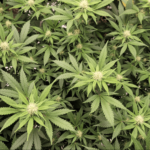
Before you can spot an imposter, you need to know what you’re comparing against. Cannabis has several distinctive features that, taken together, make it identifiable.
- Compound leaves: Cannabis leaves are palmate and compound, meaning a single leaf consists of multiple leaflets radiating from a central point, like fingers on a hand. Most cannabis plants have 5 to 11 leaflets depending on the variety and growth stage.
- Serrated edges: Every leaflet has heavily toothed, saw-like edges. This is one of the most consistent cannabis features.
- Fine hairs (trichomes): Mature cannabis plants are covered in tiny glandular hairs, especially on the flowers. These are where cannabinoids and terpenes are produced.
- Long slender stems: Cannabis grows upright with a single main stalk and long, branching side stems. It’s not a bushy shrub and it’s not a vine.
- Female bud structure: Female cannabis plants (the ones that produce usable flower) develop dense, chunky buds with protruding pistils, those long hair-like structures that turn from white to burnt orange as the plant matures.
Good cannabis education starts with understanding the plant itself, and that includes knowing what it is and what it isn’t. Now let’s look at the plants that regularly fool people.
1. Japanese Maple (Acer palmatum)
Japanese Maple is probably the most commonly mistaken cannabis look-alike, and I get it. The deeply lobed, palmate leaves can look startlingly similar at a glance, especially in photos. In summer, some varieties turn vivid red or pink, which is obviously not a cannabis trait, but in spring when the leaves are new and green, the resemblance is real.
How to tell them apart: Japanese Maple leaves are completely hairless and smooth. Cannabis leaves feel slightly rough or fuzzy. Japanese Maple also grows as a woody tree or large shrub, not an annual herbaceous plant. And crucially, the leaflets of Japanese Maple are not fully divided from each other at the base, while cannabis leaflets are clearly separated.
2. Southern Marigold (Tagetes minuta)
The Southern Marigold causes confusion mainly because of its strongly scented foliage and multi-part leaves. It grows tall and bushy, which adds to the visual similarity from a distance.
How to tell them apart: Marigold leaves are not compound in the same way as cannabis. They’re pinnately arranged rather than palmate, meaning the leaflets run along either side of a central stem rather than fanning out from a central point. The plant also blooms with small yellow flowers, and the overall leaf texture is quite different up close.
3. Sunn Hemp (Crotalaria juncea)
Sunn Hemp is a legume grown as a cover crop, primarily in warm climates. It can grow quite tall and has an upright growth habit that vaguely resembles cannabis from a distance.
How to tell them apart: This one’s easy once you get close. Sunn Hemp has simple, elliptical leaves, not compound palmate ones. Each leaf is a single piece, not divided into leaflets. It also produces bright yellow flowers, which cannabis does not. No serration, no resinous smell, no trichomes.
4. Coral Plant (Jatropha multifida)
The Coral Plant has deeply lobed leaves that genuinely look similar to cannabis in shape. It’s grown as an ornamental in warm climates and tropical regions.
How to tell them apart: Coral Plant leaves are lobed but not fully divided into separate leaflets. The lobes connect at a central point but don’t separate cleanly the way cannabis leaflets do. It also produces bright pink or red flowers and has a distinctly unpleasant odor when the stems are damaged. Cannabis smells like terpenes, which is to say pungent and identifiable in its own way. Coral Plant does not.
5. Okra (Abelmoschus esculentus)
Okra is the star of the most famous cannabis-plant confusion story in recent American history. Georgia State Patrol conducted helicopter surveillance of a rural property, spotted what they believed to be a marijuana crop, raided the property, and then had to issue a very public apology when they discovered the plants were okra. Let’s be real: that is both hilarious and a little alarming.
How to tell them apart: Okra leaves are palmately lobed, which does create the visual similarity. But okra leaves have a maximum of 7 lobes, and cannabis can produce up to 11 fully separated leaflets. Okra leaves are also much softer and broader, without the sharp serration you see on cannabis. Okra produces large white or yellow flowers with a deep red center, and of course, the plant eventually produces the vegetable itself. Also: okra doesn’t smell like cannabis. At all.
6. Cassava (Manihot esculenta)
Cassava is a staple crop across tropical regions and has deeply divided palmate leaves that are a genuine visual match for cannabis, especially young cannabis plants.
How to tell them apart: Cassava leaflets have smooth margins, not serrated edges. This is the key difference. Cannabis always has toothed leaf edges. Cassava also exudes a milky white latex sap when its stems are damaged, which cannabis does not. The stems of cassava tend to be more woody and distinctly jointed.
7. Spider Flower (Cleome hassleriana)
Spider Flower is a garden annual with compound palmate leaves and an upright growth habit. It’s a popular ornamental plant that causes occasional confusion in backyard gardens.
How to tell them apart: Spider Flower leaves have less pronounced toothing than cannabis, and the leaflets tend to be broader and less elongated. The plant produces large, showy pink, purple, or white flowers in a distinctive spidery shape at the top of the stem, which cannabis absolutely does not. Once it flowers, there’s no confusion. Before flowering, getting close and checking for trichomes (which Spider Flower lacks) settles it quickly.
8. Texas Star Hibiscus (Hibiscus coccineus)
The Texas Star Hibiscus is the look-alike that fools experienced gardeners. Its deeply divided, palmate leaves are strikingly similar to cannabis, enough that it’s sometimes grown in public gardens and causes repeated reports to local authorities.
How to tell them apart: Texas Star Hibiscus grows as a woody, perennial shrub, not an annual herb. Its leaves tend to droop more heavily than cannabis leaves. The plant produces large, dramatic crimson or white flowers. The stems are woody and sturdy rather than the pithy, slightly hollow stems of cannabis. Still, this one is close enough that a terpene profile comparison is almost unnecessary, because you’d smell the difference long before you’d need to examine leaf structure.
9. Kenaf (Hibiscus cannabinus)
Kenaf is grown as an industrial fiber crop and is actually in the same family as hemp (both are Hibiscus relatives), which explains why it looks similar. The name “cannabinus” even references cannabis.
How to tell them apart: Kenaf has lobed leaves, but the lower leaves are often heart-shaped or simple, which cannabis never produces. The upper leaves are more divided but still lack the clean, fully separated leaflets of cannabis. Kenaf produces yellow or scarlet flowers. The plant also grows taller and more uniformly than most cannabis varieties.
10. Chaste Tree (Vitex agnus-castus)
The Chaste Tree is a flowering shrub with compound palmate leaves that bear a strong resemblance to cannabis, particularly in photographs. It’s widely planted as a landscape ornamental.
How to tell them apart: Chaste Tree leaves have smooth margins, not the deeply serrated edges of cannabis. This is the dead giveaway. The plant also grows as a woody shrub or small tree, not an annual. It produces light purple, lavender, or white flower spikes that are quite distinctive. Five leaflets per leaf is typical for Chaste Tree, which is on the lower end but still within cannabis range, so the margin check is critical here.
Why Does This Actually Matter?
Beyond the entertainment value of the Georgia okra incident, mistaking plants for cannabis has real consequences. People have had their gardens destroyed by well-meaning but misinformed neighbors or law enforcement. Property owners have faced harassment over legal ornamental plants. And in the opposite direction, people have overlooked actual cannabis plants growing wild or in cultivated settings because they assumed it was “just that bushy thing.”
As cannabis legalization continues to expand across the US, understanding what cannabis actually looks like, and what it doesn’t look like, matters more than ever. The USDA Plants Database is a genuinely useful resource for identifying unfamiliar plants, and the DEA’s drug scheduling information provides context for why identification still has legal stakes in many states.
The Smell Test and Other Practical Tips
If you’re genuinely unsure whether a plant is cannabis, here are the fastest practical checks:
- Check leaf margins: Cannabis always has serrated, toothed edges. Smooth margins rule it out immediately.
- Count and examine leaflets: Cannabis leaflets are fully separated from each other. Lobed leaves where the sections connect at the base are a different plant.
- Look for trichomes: Cannabis is visibly sticky and resinous when mature. Run your fingers gently along a leaf. Cannabis sticks. Most look-alikes don’t.
- Smell it: Mature cannabis has a very distinctive terpene-rich aroma. It’s hard to describe if you’ve never encountered it, but unmistakable once you have.
- Check the stem: Cannabis stems are slightly pithy and not fully woody. Trees and shrubs are not cannabis.
Final Thoughts
Plants that look like marijuana are more common than people think, and the visual similarity is real in several cases. Japanese Maple, Texas Star Hibiscus, and Cassava are the most convincing look-alikes. Okra is probably the most famous thanks to one extremely embarrassing law enforcement incident in Georgia.
The bottom line is this: if you think you’ve spotted cannabis, look closer before you do anything about it. Check the leaf margins, feel the texture, look for trichomes, and trust your nose. Most of the time, it’s someone’s ornamental shrub. And if it is cannabis, well, that’s increasingly likely to be completely legal too.