
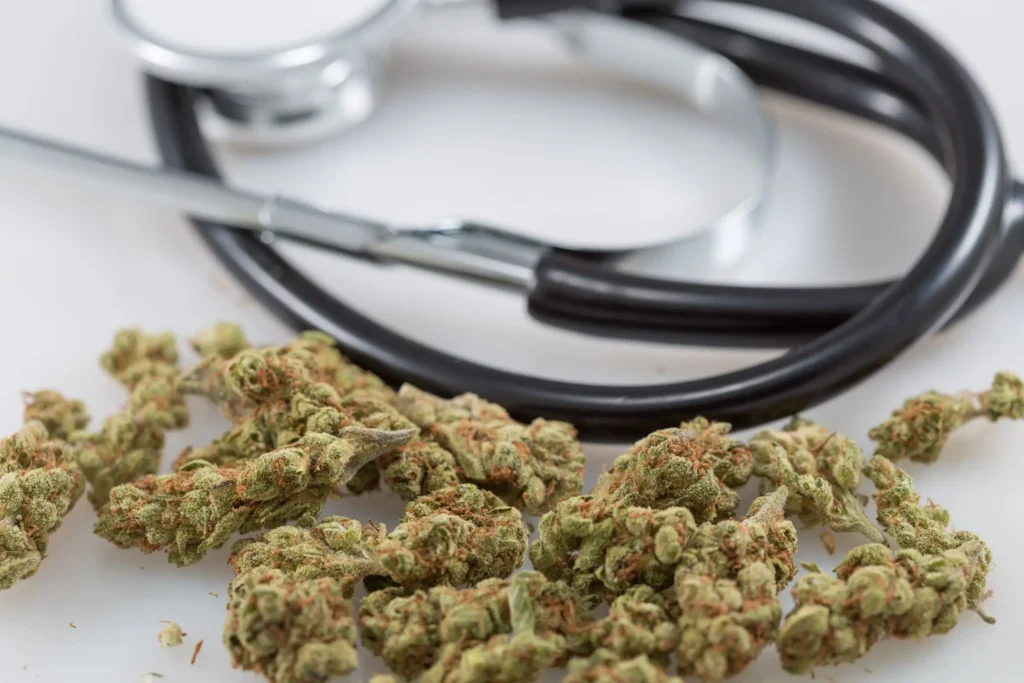

Let me tell you about something that should make you absolutely furious: Imagine being on your deathbed, in so much pain that you can’t think straight, and the only medicine that actually works is sitting in a locker because hospital bureaucracy says “sorry, federal rules.”
That’s not a hypothetical nightmare. That was reality for Ryan Bartell, a 41-year-old father, Coast Guard veteran, and special education teacher who spent his final weeks fighting for something as simple as the right to be awake and alert with his family. And honestly? The fact that we’re still having this conversation in 2026, when cannabis is
legal in 40 states for medical use, is a testament to how broken our healthcare system really is.
The Story That Started a Movement (And Why It Still Makes Me Emotional)
Let me paint you the picture, because the details matter here. Ryan Bartell wasn’t some abstract policy case study. He was a real person who worked with autistic children, ran track at an all-state level, and had a young son named Conor who deserved to have meaningful final conversations with his dad.
In March 2018, Ryan got the worst possible news: stage 4 pancreatic cancer with weeks to live. The hospital did what hospitals do. They pumped him full of morphine. Then, when that wasn’t enough, they added fentanyl, which is literally 100 times more potent than morphine. You know, the same fentanyl that’s contributing to the deaths of 75,000 Americans every year from opioid overdoses.
The result? Ryan slept. And slept. And slept some more. When he was briefly awake, he told his dad Jim that he didn’t want to spend his last few weeks unconscious. He wanted to be present for his wife Katie, for his son Conor, for his parents and siblings and the friends who came to say goodbye.
So Jim, being the kind of father who fights for his kid, found a medical cannabis chemist to create cannabis medicines for pain relief. The solution seemed obvious, right? Wrong. The hospital’s policy explicitly prohibited cannabis on the premises.
Here’s where my blood boils: The hospital was perfectly comfortable allowing fentanyl, a drug that kills tens of thousands annually, but drew a hard line at cannabis, which has never directly killed anyone in recorded history. The logic doesn’t logic.
The Transfer That Changed Everything
After four and a half weeks of watching his son sleep through what should have been precious final moments, Jim managed to transfer Ryan to another hospital in Washington state that was willing to permit medical cannabis use. Because Ryan couldn’t swallow anything (not even water at that point), the chemist created an under-the-tongue spray.
The transformation was, according to everyone who witnessed it, nothing short of miraculous. Ryan went from sedated and uncommunicative to awake, alert, and pain-free. He texted friends. He had real conversations with his family. He laughed. He reminisced. He got to be Ryan again, not just a body being kept comfortable with narcotics.
For two and a half weeks, Ryan experienced what every terminally ill patient deserves: dignity, clarity, and quality time with loved ones. Then, on April 21, 2018, he passed away with his father holding his hand.
Jim Bartell’s saddest moment became his mission. And that mission became Ryan’s Law.
What Ryan’s Law Actually Does (The Nuts and Bolts)
The Compassionate Access to Medical Cannabis Act, better known as Ryan’s Law, is beautifully simple in concept: Healthcare facilities must allow terminally ill patients who are registered medical cannabis users to access their medicine on hospital premises.
Let me be clear about what it doesn’t do, because this is important:
- Hospitals don’t provide the cannabis (patients bring their own)
- Hospitals don’t recommend cannabis (that’s between patients and doctors)
- Smoking and vaping are still prohibited (for obvious reasons about air quality and other patients)
- Only applies to terminally ill patients (defined as a prognosis of one year or less)
What it does do is prevent hospitals from forcing dying patients to choose between being hospitalized and accessing medicine that actually improves their quality of life.
California passed the original Ryan’s Law in 2021 (it went into effect January 1, 2022), and Minnesota followed suit. The law passed the California legislature unanimously, by the way. Unanimously. When was the last time you saw unanimous agreement on anything cannabis-related?
2026: The Year Ryan’s Law Goes National (Maybe)
Fast forward to 2026, and we’re seeing an explosion of Ryan’s Law proposals across the country. At least 13 states are actively considering similar legislation this year, with bills introduced everywhere from Arizona to Washington State, from Pennsylvania to Hawaii.
This is where I start to feel cautiously optimistic. The advocacy coalition behind this push is impressive: the Ryan’s Law Foundation led by Jim Bartell himself, backed by heavy-hitters like NORML, Americans for Safe Access, and the Cannabis Nurses Network. There’s even a team of student interns at San Diego State University proactively reaching out to lawmakers in state legislatures across the country.
That’s grassroots organizing at its finest, folks.
Let me walk you through what’s happening state by state, because the details reveal both progress and frustrating obstacles:
Arizona: Simple and Straightforward
Rep. Selina Bliss (D) introduced legislation that would add hospitals to the list of medical facilities where qualifying patients can use medical cannabis. The bill states that hospitals “shall allow” (not “may allow” but “shall allow”) registered qualifying patients with terminal illnesses to use marijuana in designated areas.
It’s been referred to the House Health and Human Services Committee. Whether it’ll actually get a hearing is another question, but at least it’s on the table.
Colorado: Getting Into the Details
Colorado Sen. Kyle Mullica (D) and Rep. Sheila Lieder (D) filed legislation mandating that health facilities allow terminally ill patients registered in the state’s medical marijuana program to use cannabis “subject to certain parameters.”
I appreciate that they’re thinking through the practical implementation. “Certain parameters” probably means things like storage requirements, documentation, and staff training, all of which are necessary for this to work smoothly in practice.
The Senate Health & Human Services Committee is considering it. Colorado has been relatively progressive on cannabis issues, so I’d give this one decent odds of moving forward.
Delaware: Clarity on Rights
Sen. Marie Pinkney (D) introduced Delaware’s version, which explicitly states that healthcare facilities “must permit” patients with valid registry identification cards and terminal illnesses to use medical marijuana on premises, “subject to certain restrictions.”
The language is clear and specific, which is exactly what you need when you’re dealing with something as fraught as hospital policy versus federal drug scheduling. It’s in the Senate Health & Social Services Committee.
Hawaii: Age-Based Approach
Here’s where things get interesting. Hawaii Rep. Gregg Takayama (D) and Sen. Joy San Buenaventura (D) filed companion bills that would allow qualifying patients who are 65 or older to access medical marijuana in hospitals, regulated by the state Department of Health.
Wait, just 65 and older? That’s actually broader than just terminal patients, which is a fascinating variation on the theme. Hawaii has been slowly warming to cannabis reform despite some legislative hesitation, so this compromise approach makes strategic sense.
The House version has three committee referrals; the Senate version has two. That’s a lot of hoops to jump through, but Hawaii recently advanced similar legislation, so momentum is building.
Mississippi: Republican Support
Rep. Kevin Felsher (R) is sponsoring HB 1034 to allow terminally ill qualifying patients to use medical cannabis in hospitals, nursing facilities, and hospice centers.
Let me emphasize that again: a Republican lawmaker in Mississippi is championing this. That’s significant. Mississippi isn’t exactly known as a bastion of progressive drug policy, so when you get GOP support there, it suggests this issue truly transcends party lines.
The bill already got approval from the House Public Health and Human Services Committee. That’s real progress.
New Mexico: Broadest Version Yet
Rep. Pamelya Herndon (D) filed a bill that’s actually more expansive than most. It would allow qualified patients to use medical cannabis (via means other than smoking or vaping) in hospitals, outpatient facilities, diagnostic and treatment centers, rehabilitation centers, and freestanding hospices.
And here’s the kicker: unlike most other states’ proposals, New Mexico’s version has no requirement that patients be terminally ill. That’s… honestly refreshing? The logic makes sense. If someone is hospitalized for any serious condition and cannabis helps manage their symptoms, why should they be denied access just because they’re not actively dying?
New York: Building Momentum
Assemblymember Amy Paulin (D) is championing Ryan’s Law in New York to authorize “certain patients who are terminally ill to use medical cannabis at hospitals and nursing homes.”
New York legalized adult-use cannabis back in 2021, but apparently that doesn’t automatically extend to hospital settings. The proposal is before the Assembly Health Committee. Given New York’s history of being progressive on health issues (when it wants to be), this one could gain traction.
Oklahoma: No Smoking or Vaping
Senate Assistant Minority Floor Leader Carri Hicks (D) is sponsoring SB 1508 to let qualified medical marijuana patients facing terminal illnesses access cannabis products that can’t be smoked or vaporized at hospitals.
Oklahoma’s medical marijuana program is actually one of the most permissive in the country (shockingly), so you’d think this would be an easy lift. It’s been referred to the Health and Human Services Committee.
Oregon: Comprehensive Facilities
Rep. Thủy Trần (D) and cosponsors introduced legislation requiring certain healthcare organizations and residential facilities to allow patients to use medical cannabis on premises.
Oregon was an early cannabis adopter for both medical and recreational use, so frankly, I’m surprised this isn’t already law there. The bill is in the House Health Care Committee.
Pennsylvania: The Federal Contradiction Problem
Sen. John Kane (D) is sponsoring Pennsylvania’s version, and his cosponsorship memo really nails the absurdity of the current situation: “Right now, the use of medical marijuana in hospitals is a gray area due to marijuana being a Scheduled I Narcotic, while also being legal for medicinal purposes in Pennsylvania.”
That’s the federal-state cannabis conflict in a nutshell, isn’t it? A substance is simultaneously legal medicine and a Schedule I narcotic with “no accepted medical use.” The cognitive dissonance is spectacular.
Rep. Dan Frankel (D) is seeking cosponsors for a House version. Given Pennsylvania’s substantial medical marijuana patient population, there’s meaningful constituency pressure behind this.
South Dakota: Deferred but Not Dead
Rep. Eric Emery (D) introduced a bill to allow terminally ill patients to use medical cannabis in hospitals and hospices. The House Health and Human Services Committee voted to defer the legislation this month.
Deferred doesn’t mean killed, though. It’s possible it could be revived. South Dakota has been notoriously resistant to cannabis reform (they’ve had to overturn voter-approved initiatives multiple times), so even getting a hearing is something.
Virginia: Multiple Approaches
Virginia has three bills trying to accomplish the same thing. Del. Karen Keys-Gamarra’s HB 75, Del. Irene Shin’s HB 486, and Sen. Barbara Favola’s SB 332 would each allow terminally ill patients to access medical marijuana in hospitals.
When you have three separate lawmakers introducing essentially the same bill, that signals real legislative momentum. Someone’s going to get this across the finish line eventually.
Washington State: Dignity and Comfort
Rep. Shelley Kloba (D) and Senate Majority Floor Leader Marcus Riccelli (D) are sponsoring companion Ryan’s Law bills that explicitly reference the legislature’s belief that “the medical use of cannabis may support improved quality of life for a qualifying patient.”
The language about promoting “dignity and comfort for terminally ill patients while maintaining the integrity and safety of health care environments” is exactly the balanced approach this policy needs. Washington has had legal recreational cannabis since 2012, so you’d think this would be a no-brainer.
Why This Matters More Than You Might Think
Look, I know end-of-life care isn’t the cheeriest topic. But let’s talk about why Ryan’s Law is about more than just cannabis access. It’s about something much more fundamental.
The Opioid Hypocrisy
Hospitals will pump dying patients full of enough fentanyl to knock out a horse, but balk at allowing edible cannabis products that might keep someone conscious enough to tell their kids they love them one more time.
The reasoning? Federal drug scheduling says cannabis is Schedule I (high abuse potential, no accepted medical use), while fentanyl is Schedule II (accepted medical use despite high abuse potential). Anyone else seeing the problem here?
We’ve spent the last decade watching the opioid epidemic devastate communities across America. We know these drugs are dangerous. We know they kill people. Yet they’re standard issue in hospitals, while a plant-based medicine with documented therapeutic benefits and essentially zero overdose risk is treated like contraband.
The math ain’t mathing, as the kids say.
Patient Autonomy and Dignity
Here’s what really gets me about this whole situation: We’re talking about people who are dying. They have, by definition, a year or less to live. And yet, we’re denying them the autonomy to choose the pain management approach that works best for them in their final days.
That’s not about protecting public health. That’s not about preventing addiction. That’s not about safety. That’s about bureaucratic inertia and federal policy that hasn’t caught up with scientific reality or state-level reforms.
Ryan Bartell should have been able to spend his last seven weeks awake and alert, not just the final two and a half weeks after his family moved mountains to transfer him. How many other families have lost precious time because of these policies?
The Federal Scheduling Change (Finally!)
Here’s where things get interesting, and possibly game-changing. President Trump recently issued an executive order directing officials to quickly complete the process of rescheduling cannabis from Schedule I to Schedule III.
Jim Bartell told Marijuana Moment that this is “helping a lot” with getting lawmakers on board. State legislators used to ask “What about Schedule I?” when approached about Ryan’s Law. As Bartell puts it: “Well, that’s gone now,” even though the formal rescheduling process hasn’t been completed yet.
The shift matters because a lot of hospital resistance has been based on the Schedule I classification and concerns about federal funding. Centers for Medicare and Medicaid Services (CMS) provide crucial funding to hospitals, and institutions have been understandably nervous about jeopardizing that relationship.
Moving cannabis to Schedule III acknowledges that it has accepted medical use and lower abuse potential. That’s not just a symbolic change. It’s a legal and regulatory shift that gives hospitals more confidence in adopting policies like Ryan’s Law.
Kevin Caldwell from the Marijuana Policy Project nailed it: “Now is the perfect time for healthcare systems to adopt a more humane, patient-centered approach to end-of-life care.”
The Real-World Impact on Families
Let’s bring this back to the human level, because that’s what actually matters. When Ryan got to use cannabis in his final weeks, he wasn’t just experiencing pain relief. He was:
- Texting his friends
- Having real conversations with his wife Katie
- Being present with his son Conor
- Making memories with his extended family
- Laughing and reminiscing about his life
- Maintaining his dignity and sense of self
Compare that to the four and a half weeks he spent sedated on opioids, largely unconscious and unable to connect with the people he loved. Which version of end-of-life care sounds more humane to you?
This isn’t theoretical. Studies published in the Clinical Journal of Oncology Nursing found that hospitals implementing Ryan’s Law saw positive outcomes for patients, caregivers, and staff. Cannabis terpenes can play a significant role in symptom management, with different terpene profiles offering various therapeutic benefits from pain relief to anti-anxiety effects to appetite stimulation.
The Advocacy Machine Behind the Movement
What’s remarkable about the Ryan’s Law campaign is how well-organized and strategic it’s become. This isn’t just Jim Bartell making phone calls (though he’s absolutely the heart of the movement). It’s a sophisticated advocacy operation with multiple moving parts.
The Ryan’s Law Foundation is coordinating with student interns at San Diego State University who are systematically reaching out to lawmakers on relevant committees in every state legislature. That’s smart organizing. Student interns are enthusiastic, they have time to do the legwork, and lawmakers often respond well to young constituents.
The coalition backing this includes heavy hitters in the cannabis reform world. NORML brings its decades of experience and grassroots network. Americans for Safe Access has deep expertise in medical cannabis policy and has created comprehensive implementation guides for healthcare facilities. The Cannabis Nurses Network provides crucial medical professional credibility and practical healthcare insights.
That’s the kind of coalition that actually moves legislation.
The Opposition (And Why Their Arguments Fall Flat)
Let’s be honest about the resistance, because it’s important to understand what Ryan’s Law is up against.
Federal Funding Fears
The biggest concern from hospitals has been the risk to federal funding, particularly from CMS (Centers for Medicare and Medicaid Services). Hospitals receive billions in federal reimbursements, and they’ve been understandably nervous about potentially jeopardizing that money by violating federal drug laws.
Here’s the thing, though: California passed Ryan’s Law in 2021 and it’s been in effect since 2022. Minnesota has a similar law. Have either state’s hospitals lost federal funding? Nope. Has CMS taken enforcement action? Nope. Has the Justice Department swooped in? Nope.
Most Ryan’s Law proposals include “safe harbor” clauses that allow hospitals to suspend cannabis access if federal agencies explicitly threaten enforcement or funding. That’s a reasonable compromise that addresses the concern without blocking the reform entirely.
The Schedule I Problem (Which Is Rapidly Becoming Irrelevant)
The other major argument has been “but it’s Schedule I!” Cannabis’s classification as a Schedule I substance, alongside heroin and LSD, has created this weird legal limbo where state-legal medicine is federally prohibited.
But that’s changing. The federal rescheduling process is underway. Even before formal completion, the writing is on the wall: Cannabis has accepted medical use. The DEA knows it. The FDA knows it. Congress knows it. At this point, maintaining Schedule I status is just regulatory momentum and political inertia.
Plus, as Jim Bartell pointed out, the “Schedule I problem” didn’t actually stop California and Minnesota from passing and implementing Ryan’s Law. So clearly, it’s a surmountable obstacle.
“What About Smoking?”
Some people worry about patients smoking cannabis in hospitals around other patients with respiratory issues. That’s a legitimate concern! Which is why literally every Ryan’s Law proposal explicitly prohibits smoking and vaping.
Problem solved. Patients can use edibles, tinctures, capsules, sublingual sprays, and topicals. There are plenty of non-inhalable cannabis products that deliver therapeutic benefits without creating secondhand smoke.
Next objection?
What Happens Next (The Realistic Outlook)
So will all 13 states pass Ryan’s Law this year? Probably not. Legislative sausage-making is slow and unpredictable, especially on issues involving cannabis.
But here’s what I think will happen: Several more states will pass versions of Ryan’s Law in 2026. The momentum is building. The advocacy is organized. The federal Schedule I barrier is crumbling. And most importantly, once you hear Ryan Bartell’s story, it’s really hard to justify denying terminally ill patients this option.
Mississippi’s Republican-sponsored bill advancing out of committee is a huge signal. Hawaii making progress despite some legislative caution shows bipartisan support. Pennsylvania’s legislators explicitly calling out the federal-state contradiction demonstrates growing impatience with incoherent policy.
I’d bet on Colorado, Washington State, and New Mexico passing their versions. Pennsylvania and Virginia have strong shots. The others are wildcards that’ll depend on local politics and advocacy pressure.
My Take on All of This
I’m going to be blunt about my opinion here: Opposing Ryan’s Law is indefensible. Full stop.
We’re talking about people who are dying. People with a year or less to live. People who just want to spend their final days awake, alert, and present with their loved ones. And we’re denying them access to a medicine that works, that’s safe, and that’s already legal in their state, because of federal scheduling that everyone acknowledges is outdated?
That’s not policy. That’s cruelty dressed up in bureaucratic language.
Jim Bartell put it perfectly: The saddest moment of his life was holding Ryan’s hand as he took his last breath. But he’s working to make that moment less painful by ensuring other families don’t have to watch their loved ones sleep away their final weeks on opioids when cannabis could give them quality time instead.
That’s a father’s love transformed into a movement for compassionate healthcare. If that doesn’t move you, check your pulse.
The science supports medical cannabis for pain management, anxiety relief, appetite stimulation, nausea reduction, and numerous other symptoms that plague terminally ill patients. The therapeutic effects of specific terpenes like linalool for anxiety or myrcene for pain are increasingly well-documented.
We’re not talking about recreational use. We’re not talking about getting high for fun. We’re talking about medicine that lets dying people be themselves in their final days.
If your policy prevents that, your policy is wrong. Fix it.
What You Can Do
If you care about this issue (and honestly, if you’ve read this far, you obviously do), here’s how you can help:
1. Contact Your State Legislators
Find out if your state has a Ryan’s Law proposal pending. If it does, call or email your representatives and senators. Tell them you support it. Share Ryan’s story. Make it clear that constituents care about compassionate end-of-life care.
Don’t know who represents you? Look it up on your state legislature’s website.
2. Support the Ryan’s Law Foundation
The Ryan’s Law Foundation is doing the hard work of coordinating this nationwide push. They’re training advocates, reaching out to lawmakers, and keeping the momentum going. Follow their work, share their materials, and support them however you can.
3. Share the Story
Ryan’s story is powerful. Jim Bartell’s advocacy is inspiring. The more people who know about this issue, the harder it becomes for legislators to ignore it or hospital systems to resist it.
Share this article. Share Jim’s story. Talk about why end-of-life dignity matters. Personal stories change minds and move policy.
4. If You’re a Healthcare Professional
If you work in healthcare, especially in hospitals or hospice settings, advocate within your institution for policies that support Ryan’s Law. Talk to your administrators. Educate your colleagues. Be ready to implement compassionate cannabis access when your state passes legislation.
The Cannabis Nurses Network has created excellent resources for healthcare providers. Use them.
5. Remember the Human Cost
When you hear people opposing Ryan’s Law for bureaucratic or political reasons, remind them what’s actually at stake: Families losing precious final moments together. Patients spending their last weeks sedated instead of present. Children not getting meaningful goodbyes with their parents.
That’s not hypothetical. That’s real harm caused by maintaining the status quo.
The Bottom Line
Thirteen states are considering Ryan’s Law in 2026. Some will pass it. Some won’t. But the national trajectory is clear: We’re moving toward compassionate end-of-life care that includes access to medical cannabis.
It shouldn’t have taken Ryan Bartell’s death to start this conversation. It shouldn’t require Jim Bartell’s tireless advocacy to make progress. But here we are, and the movement is gaining momentum.
California and Minnesota have shown it can work. The federal rescheduling process is eliminating the biggest policy barrier. Advocacy organizations are coordinated and effective. And most importantly, once legislators hear the stories of families affected by current policies, they understand why change is necessary.
Ryan didn’t get to benefit from the law that bears his name. But thousands of terminally ill patients in California have, and hopefully thousands more in other states soon will. They’ll get to spend their final days awake and alert, experiencing calming effects from cannabis terpenes instead of narcotic-induced sedation.
They’ll get to tell their kids they love them. They’ll get to laugh with old friends. They’ll get to reminisce about their lives. They’ll get to be themselves until the very end.
That’s what Ryan’s Law provides. That’s what dignity looks like. That’s what compassionate healthcare should always have offered but too often doesn’t.
Jim Bartell promised his son that no other family would have to face what they did. State by state, law by law, that promise is being kept.
If your state is one of the 13 considering Ryan’s Law this year, now is the time to speak up. Contact your legislators. Share Ryan’s story. Demand compassionate end-of-life care.
Because when you’re dying, the last thing you should have to worry about is whether you’ll be allowed to use the medicine that actually lets you be present for your final goodbye.
For more information on state medical marijuana programs and legislation, visit the National Conference of State Legislatures cannabis policy page or check Americans for Safe Access resources for implementation guidance.
Let’s finish what Ryan started. Let’s make compassionate care the rule, not the exception.
Related reading: Where to buy premium cannabis terpenes