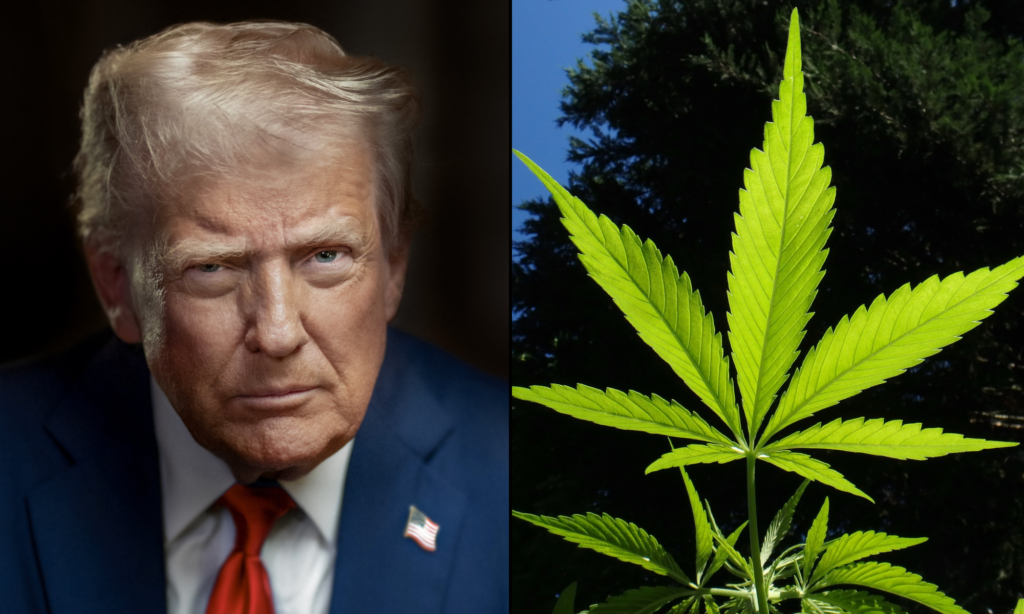

Here’s the headline: 83% of cannabis consumers are fully on board with President Trump’s executive order to reschedule marijuana. That’s not just support, that’s a mandate. That’s the kind of overwhelming consensus politicians dream about.
But here’s the part that should make you raise an eyebrow: It’s been over a month since Trump signed that order on December 18, 2025, directing Attorney General Pam Bondi to “expeditiously” finalize the rescheduling process from Schedule I to Schedule III. And where are we now? Radio silence from the Department of Justice.
So yeah, cannabis consumers are excited about the order. The question is whether that excitement is premature, or if we’re finally going to see actual policy change instead of just political theater.
Let me break down what’s actually happening here, why it matters more than you might think, and why I’m cautiously optimistic but absolutely not holding my breath.
The Numbers: Cannabis Consumers Want This (Badly)
NuggMD, a cannabis telehealth platform, surveyed 457 cannabis consumers in legal states between January 8-28, and the results are pretty damn clear:
Do you support or oppose the executive order to reschedule cannabis?
- Support: 82.9% (379 people)
- Oppose: 7.4% (34 people)
- No opinion: 9.6% (44 people)
That’s not just majority support. That’s overwhelming, crushing, undeniable support. When was the last time 83% of any group agreed on anything in American politics? I’ll wait.
But here’s where it gets even more interesting. NuggMD didn’t just ask whether people supported the order. They asked a follow-up question that actually tests whether people understand what rescheduling means, because there’s been a LOT of confusion out there.
The question basically said: “Look, rescheduling isn’t legalization. It’s not going to make cannabis suddenly legal everywhere. But it would lead to more medical research and give cannabis companies the same tax breaks that other businesses get. How much do you care about those outcomes?”
The responses:
- A great deal: 73.4% (334 people)
- Some: 21.8% (99 people)
- A little bit: 3.3% (15 people)
- Not at all: 1.5% (7 people)
So 95% of cannabis consumers care at least “some” about the real, practical impacts of rescheduling, and nearly three-quarters care “a great deal.” That’s informed enthusiasm, not just knee-jerk support for anything cannabis-related.
These numbers tell me something important: Cannabis consumers aren’t idiots. They understand that Schedule III isn’t a silver bullet. They know it’s not full legalization. But they also understand that research access and tax equity matter, and they want progress even if it’s incremental.
What Trump Actually Did (And Didn’t Do)
Let’s be super clear about what happened on December 18, 2025, because there’s been a ton of misinformation floating around.
Trump signed Executive Order 14370 titled “Increasing Medical Marijuana and Cannabidiol Research.” The order directs Attorney General Pam Bondi to complete the ongoing rulemaking process to move marijuana from Schedule I to Schedule III “in the most expeditious manner in accordance with Federal law.”
Here’s what the order did NOT do:
- It did not automatically reschedule cannabis (executive orders can’t do that unilaterally)
- It did not legalize cannabis federally
- It did not change any state laws
- It did not immediately grant tax benefits to cannabis businesses
- It did not open the floodgates for research tomorrow morning
What it DID do is basically say “Hey, Attorney General, there’s this rescheduling process that’s been dragging on since May 2024 when the DEA proposed the change. Could you, like, actually finish it? Please? Soon-ish?”
Andrew Graham, head of communications at NuggMD, made an important distinction when talking to Marijuana Moment: “The EO from President Trump that tells the attorney general to finish the rescheduling process in the most expeditious manner is different from the 2022 statement from President Biden that requested [HHS] begin the process.”
He’s right. Biden started the ball rolling. Trump is trying to push it across the finish line. There’s a difference in urgency and directness, and given how this administration seems to operate versus the last one, that difference might actually matter.
Graham added: “I don’t see an avenue for the attorney general to openly defy the president’s order while also maintaining her power and proximity to it, which is why I think rescheduling will indeed happen this year.”
I want to believe him. I really do. But I’ve been covering cannabis policy long enough to know that “will happen this year” is a phrase that’s aged poorly many, many times before.
The Deafening Silence from DOJ
Here’s where things get frustrating. Trump signed this order over a month ago. The language was pretty clear: do this “in the most expeditious manner.” That doesn’t sound like “take your time, no rush, get around to it whenever.”
And yet, when Marijuana Moment asked the Justice Department for an update last week, the response was: “no comment or updates.”
No comment. Or updates.
That’s not “we’re working on it.” That’s not “stay tuned for an announcement soon.” That’s bureaucratic stone-walling, and it’s exactly the kind of thing that makes cannabis reform advocates bang their heads against walls.
Meanwhile, the DEA filed a joint status report in January saying the rescheduling appeal process “remains pending” with no briefing schedule set. Translation: nothing is actually moving forward right now.
Let me be clear about what I think of this situation: It’s garbage. If the president issues an executive order directing an agency to complete something expeditiously, and that agency responds with bureaucratic foot-dragging and “no comment,” that’s a problem. That’s either incompetence or deliberate obstruction, and neither is acceptable.
But Wait, There’s More Confusion!
Remember when Matt Gaetz, Trump’s first pick for Attorney General (who withdrew his nomination), posted on X that he’d been told the DEA is “actively drafting a rescheduling rule” and intended to issue it “ASAP”?
Yeah, about that. There’s already a proposed rule pending before the Justice Department from May 2024. So is the DEA drafting a new rule? Or are they finalizing the existing one? Because a new rule would require additional administrative review and public comment, which would delay things significantly.
Nobody seems to know. Or if they do know, they’re not saying.
This is the kind of confusion that drives me absolutely bonkers about federal cannabis policy. We’ve got executive orders, pending rules, appeals, hearings that got scheduled and then stayed, and absolutely zero transparency about what’s actually happening or when.
Why This Matters More Than You Think
Okay, so rescheduling to Schedule III isn’t full legalization. I get it. But let’s talk about why it’s still a really big deal, especially when it comes to cannabis research and the therapeutic potential of cannabis terpenes.
The Research Barrier Problem
Right now, cannabis is Schedule I, which means the federal government officially considers it to have “no accepted medical use” and “high potential for abuse.” This creates massive barriers for researchers who want to study cannabis and its therapeutic applications.
Schedule I substances require special DEA licenses that are incredibly difficult to obtain. Researchers face stringent security requirements, complicated storage protocols, and mountains of paperwork. Oh, and they can only obtain cannabis from a very limited number of federally authorized suppliers.
The result? Promising research into how different terpene profiles work for conditions like chronic pain, anxiety, sleep disorders, and more gets bottlenecked by bureaucracy.
Moving cannabis to Schedule III would acknowledge that it has accepted medical use. That simple administrative change would dramatically reduce research barriers. Researchers could use standard DEA registration processes. They could access normal procurement channels. They could actually, you know, research the plant that millions of Americans are already using for medical purposes.
Think about how backwards this is: We have millions of medical cannabis patients using products with specific terpene compositions for symptom management, but researchers face ridiculous obstacles to studying exactly how and why those terpenes work. That’s like having millions of people take aspirin while making it nearly impossible for scientists to study how aspirin works.
The Tax Equity Issue
Here’s the other huge issue: Section 280E of the tax code.
Currently, because cannabis is Schedule I or II, cannabis businesses can’t deduct normal business expenses like rent, utilities, employee salaries, marketing, or any of the costs that literally every other business can deduct. They can only deduct cost of goods sold.
This creates an effective tax rate that can hit 70% or higher. Seventy percent! No other industry in America operates under this kind of tax burden.
According to recent analysis, cannabis retailers in higher-volume states like Maryland would save an average of $805,000 annually per store if Section 280E restrictions were removed. That’s not pocket change. That’s the difference between sustainable businesses and businesses perpetually on the edge of bankruptcy.
Moving cannabis to Schedule III would remove 280E restrictions. Cannabis businesses would suddenly be able to deduct wages, rent, equipment purchases, R&D expenses, and all the normal business costs. They’d be able to claim the Research & Development tax credit. They’d have access to bankruptcy courts. They’d be treated like, you know, actual businesses.
The One Big Beautiful Bill Act that was recently passed includes provisions for 100% bonus depreciation and increased Section 179 expensing. Cannabis businesses would finally be able to take advantage of these tax benefits that every other business enjoys.
Is this full federal legalization with interstate commerce and banking access? No. But it’s a massive improvement over the current punitive tax system.
The Political Reality Check
Here’s where I need to inject some realism into this discussion, because cannabis policy brings out a lot of wishful thinking.
Republican Opposition (That Wasn’t Quite Enough)
Twenty-two Senate Republicans sent Trump a letter on December 17, the eve of his executive order, asking him not to go through with rescheduling. Their argument? “The only winners from rescheduling will be bad actors such as Communist China, while Americans will be left paying the bill.”
That’s… quite a take. I’m not sure how “Communist China” benefits from U.S. cannabis rescheduling, but I guess we’re just throwing things at the wall to see what sticks?
Here’s the more interesting detail: 31 Senate Republicans (58% of the GOP caucus) chose NOT to sign that letter. That suggests the party is pretty divided on this issue, and opposition to rescheduling is not a unified Republican position.
Two GOP senators even filed an amendment to block the rescheduling, but it wasn’t considered on the floor. And critically, when it came time to finalize appropriations bills, Congress removed language that would have stripped the DOJ of its rescheduling authority.
That tells me something: Despite vocal opposition from some quarters, there isn’t enough political will to actually stop this. The opposition can make noise, but they can’t block it legislatively.
The Cory Booker Reality Check
Sen. Cory Booker (D-NJ), who’s been a cannabis reform advocate for years, gave a quote that I think perfectly captures the appropriate level of skepticism:
“The ability of the Trump administration to speak out of both sides of their mouth is staggering. So I’m just going to wait and see right now. Obviously, there’s things that look promising—to end generations of injustice. I really want to wait and see.”
Yeah. That’s where I’m at too.
Trump signs an executive order saying he’s overwhelmed by the number of people asking for this, that it’s about veterans and chronic pain patients, that it’s “common sense.” And then… nothing happens for over a month? The Justice Department has “no comment”? The DEA says things “remain pending”?
I want to believe this is real progress. But I’ve seen too many cannabis reform promises evaporate to count my chickens before they hatch.
The Congressional Research Service Warning
The Congressional Research Service released a report pointing out that DOJ could, theoretically, reject the president’s directive or delay the process by restarting the scientific review into marijuana.
Could they? Technically, yes. The Controlled Substances Act doesn’t grant presidents unilateral authority to reschedule drugs. That authority rests with the Attorney General (who delegated it to the DEA).
Would they openly defy a presidential order? That seems politically risky, especially given how this administration operates. But the CRS report is a reminder that executive orders aren’t magic wands. They’re directives that still have to go through administrative processes.
What Cannabis Consumers Actually Want (Beyond Rescheduling)
Let’s zoom out for a second and talk about what the cannabis community actually wants, because rescheduling is great but it’s not the end goal.
The NuggMD poll shows that consumers understand rescheduling’s limitations. They get that it’s not legalization. But they also care deeply about the research and tax implications because those things matter for the long-term trajectory of cannabis normalization.
What would full normalization look like?
Federal legalization, which would:
- Remove cannabis from the Controlled Substances Act entirely
- Allow interstate commerce (right now, even legal states can’t ship cannabis across borders)
- Open up banking access (most cannabis businesses still operate cash-only because banks won’t touch them)
- Enable credit card processing at dispensaries
- Eliminate the risk of federal prosecution for state-legal activities
Expungement and criminal justice reform, which would:
- Clear records for people convicted of cannabis offenses that are now legal
- Release people currently imprisoned for cannabis-only offenses
- Restore rights to people who lost voting, housing, or employment opportunities due to cannabis convictions
Research expansion, which would:
- Fund comprehensive studies on therapeutic applications
- Investigate how different terpene combinations affect various conditions
- Develop clinical guidelines for medical use
- Study long-term health impacts
Social equity programs, which would:
- Prioritize licenses for communities disproportionately harmed by prohibition
- Provide resources and support for minority-owned cannabis businesses
- Invest cannabis tax revenue back into affected communities
Rescheduling to Schedule III is a step toward these goals, but it’s not a substitute for them. And I think cannabis consumers understand that nuance, which is why the poll results are so interesting. People are excited about progress while recognizing there’s much more work to do.
My Take on All of This
Alright, opinion time. Here’s what I actually think is happening and where I think we’re headed.
On Trump’s Order: I believe Trump genuinely signed this order because he was “inundated” by requests, as he said. Cannabis reform has widespread bipartisan public support (87% according to recent polling), and Trump is nothing if not responsive to popular opinion when it suits him politically.
I also think he sees veterans and chronic pain patients as a politically sympathetic constituency. When he talks about people “begging” him to do this and mentions folks with “service-related injuries” and “chronic medical problems,” I don’t think that’s just rhetoric. Those are real people with real needs, and there’s genuine political value in addressing them.
On the DOJ’s Silence: This is where I get frustrated. An executive order directing expeditious action should mean… expeditious action. The month-long silence from DOJ feels like either bureaucratic inertia or deliberate foot-dragging.
My guess? There are people within DOJ and DEA who oppose rescheduling and are trying to slow-walk the process. They can’t openly defy the order, but they can delay it with procedural questions, appeals, briefing schedules, and administrative review.
On What Will Actually Happen: I think rescheduling will eventually happen, probably in 2026. The political momentum is too strong, the public support is too overwhelming, and Trump’s not going to let his own appointees make him look ineffective on something he publicly championed.
But “eventually” could mean next month or it could mean December. And there will probably be legal challenges once it’s finalized. Anti-cannabis groups have already said they’re hiring lawyers (including Trump’s former AG Bill Barr) to sue to block rescheduling.
This isn’t going to be a clean, smooth process. It’s going to be messy, complicated, and frustrating. Because cannabis policy in America is always messy, complicated, and frustrating.
On the Bigger Picture: Rescheduling to Schedule III will be meaningful progress. It will help cannabis research advance. It will provide tax relief to cannabis businesses. It will further normalize cannabis in medical contexts.
But it’s not enough. We need full federal legalization, criminal justice reform, and comprehensive policy that treats cannabis like what it is: a relatively low-risk substance that millions of Americans use responsibly for both medical and recreational purposes.
The fact that 83% of cannabis consumers support this order tells me the community understands that progress is incremental. They’re not waiting for perfection. They’re taking wins where they can get them while continuing to push for comprehensive reform.
And honestly? That’s the right approach. Celebrate progress. Demand more. Hold leaders accountable. Rinse and repeat until we have sensible cannabis policy.
What Happens Next (The Honest Version)
So where do we go from here? What should cannabis consumers, businesses, and advocates be watching for?
Short Term (Next Few Months):
- Watch for DOJ/DEA announcements on the rescheduling rule
- Pay attention to whether they finalize the existing May 2024 proposed rule or issue a new one
- Look for legal challenges from anti-cannabis groups once anything is finalized
- Monitor whether Congress tries to block rescheduling through appropriations riders (they’ve tried and failed so far)
Medium Term (Rest of 2026):
- If rescheduling happens, watch how quickly tax benefits materialize for cannabis businesses
- Look for increased research funding and new studies on therapeutic applications
- Track whether insurance companies start covering medical cannabis (unlikely immediately, but possible down the line)
- See whether state medical cannabis programs expand or evolve in response
Long Term (Beyond 2026):
- Push for full federal legalization, not just rescheduling
- Advocate for criminal justice reform and expungement
- Support research into terpene science and therapeutic applications
- Work toward comprehensive cannabis policy that prioritizes public health, patient access, and social equity
The NuggMD poll shows that cannabis consumers are informed, engaged, and supportive of progress. That’s encouraging. Now we need to see whether the federal government can actually deliver on that progress or whether we’re in for another round of promising announcements followed by bureaucratic delays.
The Bottom Line
Eighty-three percent of cannabis consumers support Trump’s rescheduling order. That’s not just a number, that’s a mandate from the people who actually understand cannabis policy and live with its effects.
But support for an executive order means nothing if that order doesn’t get implemented. It’s been over a month. The DOJ has “no comment.” The DEA says things “remain pending.”
Cannabis consumers are tired of waiting. They’re tired of promises without follow-through. They’re tired of watching other industries get normal tax treatment while cannabis businesses pay 70% effective rates. They’re tired of seeing promising medical cannabis research get bottlenecked by Schedule I restrictions.
The poll results show people aren’t just blindly enthusiastic. They understand the limitations of rescheduling. They know it’s not legalization. But they care about research access and tax equity because those things matter for the future of cannabis normalization.
So here’s my message to Attorney General Pam Bondi and the Department of Justice: Your boss issued an order over a month ago directing you to complete this “in the most expeditious manner.” Stop stalling. Stop with the “no comment” responses. Do your job.
And here’s my message to cannabis consumers and advocates: Stay vigilant. Keep pressure on lawmakers and agencies. Don’t assume progress is inevitable just because an executive order was signed. We’ve been here before. We know how this goes.
Progress is possible. This poll proves there’s overwhelming support. But support without action is just noise. It’s time to see whether this administration delivers on its promises or whether this is just another false start in the long, frustrating history of federal cannabis reform.
I’m cautiously optimistic. But I’m definitely not holding my breath.
For more information on the federal rescheduling process, visit the Congressional Research Service analysis or check updates from the Drug Enforcement Administration.
Related reading: Where to buy premium cannabis terpenes