
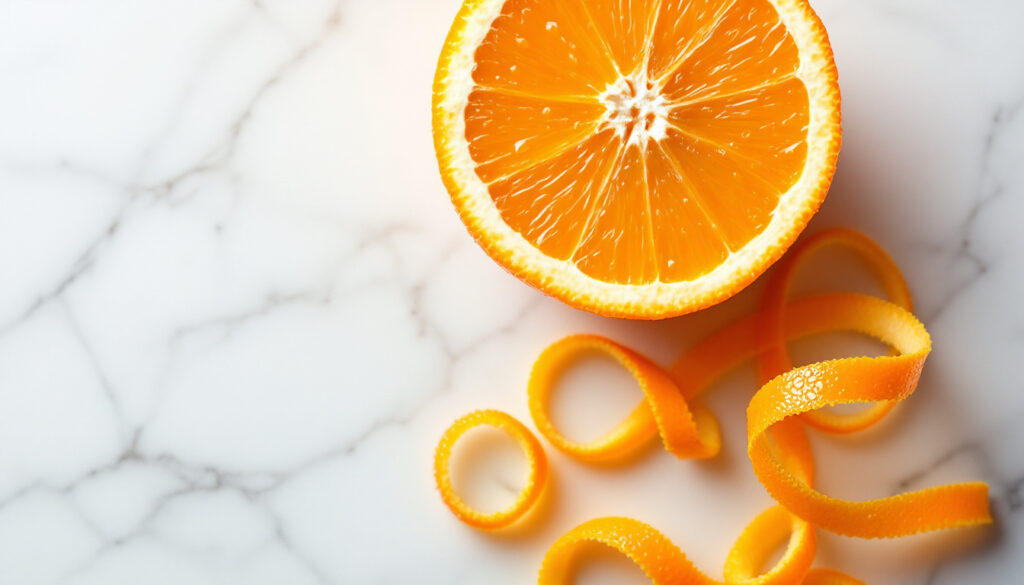

Peel a Valencia orange and breathe in. That bright, sweet, slightly woody citrus hit is not coming from the juice. Most of it is a single sesquiterpene called valencene, and it is named after the very orange that made it famous.
Valencene shows up in cannabis too, usually in modest amounts, where it lends a clean orange-zest character to a strain’s nose. It rarely runs the show the way myrcene or limonene do. But when it is present, you tend to notice.
This profile walks through what the valencene terpene actually is, what the research does and does not support, the strains it tends to appear in, and why flavor and beverage formulators keep coming back to it. We will keep the science honest. A lot of what gets repeated about terpene “effects” is preliminary, and valencene is no exception.
What is the valencene terpene?
Valencene is a sesquiterpene with the chemical formula C15H24. It is an aroma component of citrus fruit, and as its Wikipedia entry notes, it is obtained inexpensively from Valencia oranges, which is exactly where the name comes from.
That “sesqui” prefix matters. Sesquiterpenes are built from 15 carbon atoms, making them larger and heavier than monoterpenes like limonene or pinene. Heavier molecules are generally less volatile, so they evaporate more slowly and tend to hang around longer in an aroma or a product. Caryophyllene and humulene sit in the same weight class.
Plants build valencene from farnesyl pyrophosphate using an enzyme called valencene synthase. In sweet orange peel that reaction is the main source of the compound, which is why the scent lives in the rind rather than the flesh.
How does valencene smell and taste?
Sweet, fresh citrus with an orange-forward, slightly herbaceous and woody edge. A 2024 review in Frontiers in Microbiology describes valencene plainly as a carbobicyclic sesquiterpene with “the odor of sweet, fresh citrus.”
People often read tangerine, grapefruit, and a touch of greenery on top of the obvious orange note. It is less sharp than limonene and a little rounder. If limonene is the lemon-peel snap, valencene is closer to the warm sweetness of a whole orange left in a fruit bowl.
Where valencene comes from
Citrus is the headline source, but valencene is not unique to cannabis or to oranges. The Frontiers review lists grapefruit, tangerine, and orange among the citrus fruits and strains that produce it naturally.
The catch is concentration. Even in citrus, valencene sits at only 0.2 to 0.6 percent by weight, according to that same review. That sounds tiny, and it is, which is why extracting commercial volumes straight from fruit is expensive and supply is at the mercy of each harvest.
In cannabis it is usually a secondary or minor terpene rather than a dominant one. You will see it reported in fractions of a percent in flower, sitting beneath the heavy hitters. That puts it in interesting company alongside other less-common compounds, which is part of why the difference between common and rare terpenes is worth understanding before you read too much into a lab report.
Valencene effects: what the research actually shows
Here is where honesty earns its keep. Valencene has a small but real research footprint, almost entirely in cells and animals. None of it establishes a clinical effect in humans, and the cannabis-community framing of valencene as “uplifting” or “mood-boosting” is anecdotal, not something the peer-reviewed literature has demonstrated.
What the studies do explore is mostly anti-inflammatory and skin-related activity.
Anti-inflammatory and skin research
The most cited example is a preclinical study published in the journal Mediators of Inflammation, which tested valencene on atopic dermatitis-like skin lesions in mice. Topical valencene significantly reduced the eczema-like symptoms and helped restore filaggrin, a protein important for skin-barrier function. The researchers also recorded lower levels of serum IgE and the inflammatory markers IL-1β, IL-6, and IL-13.
That is a genuinely interesting result, but read the fine print. It was a mouse model, the valencene was applied directly to skin, and a positive signal in a controlled animal study is a starting point, not proof that it does the same thing in people. The 2024 Frontiers review summarizes the broader picture the same way, noting valencene has been investigated for anti-allergic, anti-inflammatory, immunostimulatory, and skin-protective effects.
So the fair summary looks like this:
- Reasonably supported in preclinical work: anti-inflammatory and skin-barrier activity in animal and cell models.
- Anecdotal, not clinically established: uplifting, energizing, or mood-related “effects” attributed to the terpene.
- Not demonstrated: any standalone medical benefit in humans at the doses found in cannabis.
If your interest is genuinely in daytime, brighter aroma profiles, it is more useful to think in terms of an overall terpene blend and the strains it appears in than to pin hopes on one minor compound doing the heavy lifting.
The nootkatone connection (and why insect repellent comes up)
Valencene has a famous chemical relative. Oxidize it and you get nootkatone, the compound largely responsible for the smell and taste of grapefruit. The Frontiers review confirms that valencene “can be oxidized to form nootkatone” and that this conversion has been studied through chemical, biotransformation, and enzyme-driven routes.
That relationship is why valencene and insect repellent end up in the same conversation. Nootkatone, the thing valencene becomes, turns out to repel and kill biting pests. In 2020 the US EPA registered nootkatone as a new active ingredient, noting that products formulated from it “may repel and kill ticks, mosquitoes, and a wide variety of other biting pests.”
The CDC describes nootkatone as a compound found in tiny quantities in grapefruit skin and Alaska yellow cedar that is “able to repel and kill ticks and insects, including mosquitoes.” Worth being precise here: it is nootkatone, not valencene itself, that carries the EPA registration. Valencene is the cheaper, more abundant feedstock that nootkatone is often made from.
Why brands keep reaching for valencene
Long before cannabis labels listed it, the flavor and fragrance industry was buying valencene by the barrel. The Frontiers review calls it one of the most valuable terpenes used on a commercial scale, with applications spanning the beverage industry, fragrances, and food, personal care, and home care products.
The appeal is obvious. It delivers an authentic, natural orange note that is hard to fake convincingly, and it pairs cleanly with other citrus aromatics. For a beverage formulator, a real sesquiterpene reads very differently on the palate than a flat synthetic orange flavoring.
Supply is the headache. Because fruit yields so little, companies increasingly produce valencene through fermentation using engineered yeast and other microbes, which the review frames as a route with better scalability, price stability, and supply flexibility than squeezing it out of oranges. Commercial fermentation-derived valencene has been on the market since 2010.
For cannabis brands, the takeaways are practical:
- Use it for character, not as a hero. A small dose of valencene rounds out and sweetens a citrus profile rather than dominating it.
- Mind the volatility difference. As a heavier sesquiterpene it survives processing better than delicate monoterpenes, which matters when heat enters the picture.
- Source it honestly. Natural-identical fermentation valencene and citrus-extracted valencene are both legitimate, but they are not the same story to tell on a label, so know which you are buying.
Cannabis strains associated with valencene
Because valencene is usually a minor terpene, strain associations are looser than they are for headline compounds, and exact numbers swing hard between phenotypes and grows. With that caveat, a few strains are commonly reported to carry a noticeable valencene-style orange note.
- Tangie, a sativa-leaning strain known for its loud tangerine and citrus nose.
- ACDC, a high-CBD strain often described with sweet citrus and orange notes.
- Various other citrus-forward cultivars, particularly those already rich in limonene.
Treat any strain-to-terpene shortcut with healthy skepticism. The only reliable way to know what is in a given batch is a current certificate of analysis, which is exactly why learning to read terpene profiles to choose a strain beats trusting a name on a jar.
How valencene compares to its citrus cousins
Valencene rarely works alone. It tends to show up alongside other fruity and citrus terpenes, and the combination is what gives a strain its full personality.
The most obvious neighbor is limonene, the dominant citrus monoterpene that brings the bright, zesty top note. Where valencene is a slower, sweeter orange, limonene supplies the sharp lift at the front of the aroma. The two complement each other well, which is part of why citrus strains so often read as layered rather than one-dimensional.
It also sits comfortably beside ocimene, a fruity and slightly herbal terpene, in cultivars that lean tropical and sweet. None of these compounds is doing its job in isolation. The aroma you actually smell is the sum of the blend.
Frequently asked questions about valencene
Is valencene the same as limonene?
No. Limonene is a lighter monoterpene with a sharp lemon-peel aroma, while valencene is a heavier sesquiterpene with a sweeter, rounder orange scent. They often appear together in citrus strains but are different molecules with different weights and volatility.
Does valencene make you feel uplifted?
The “uplifting” reputation is anecdotal. Peer-reviewed research on valencene has focused on anti-inflammatory and skin-protective activity in animal and cell studies, not on mood. There is no clinical evidence that the small amounts found in cannabis produce a specific energizing effect.
Is valencene used in food and drinks?
Yes. It is widely used in the beverage industry, fragrances, and food, personal care, and home care products for its natural orange aroma. Because citrus yields so little of it, much of the commercial supply now comes from fermentation rather than fruit.
What is the link between valencene and insect repellent?
Valencene can be oxidized into nootkatone, a grapefruit-scented compound that the EPA registered in 2020 as an active ingredient shown to repel and kill ticks and mosquitoes. The repellent action belongs to nootkatone, with valencene serving as the cheaper raw material it is often made from.
The takeaway
Valencene is a small terpene with an outsized backstory. It carries the unmistakable scent of a Valencia orange, it is the feedstock behind an EPA-registered tick and mosquito repellent, and it quietly flavors a huge share of the citrus products you already buy. In cannabis it is a supporting player that sweetens and rounds out a citrus profile rather than defining it. Keep the effects claims modest, lean on a current lab report rather than a strain name, and appreciate valencene for what it genuinely is: one of the most pleasant and useful aroma compounds the citrus world has handed us.