
Every time the federal hemp deadline moves in the news, a lot of people relax. Then they walk into a store in their own state and find the shelf is empty anyway.
That is not a mistake by the store. Hemp rules run on two tracks, and the federal one is only half the answer.
Track one: the federal definition
Federal law defines what counts as hemp. Section 781 of Public Law 119-37 rewrites that definition effective 365 days after the Act was signed on 12 November 2025, which puts it at 12 November 2026.
The new version measures total tetrahydrocannabinols, expressly including THCA, against the 0.3 percent dry weight line. It also excludes finished products carrying more than 0.4 milligrams combined total per container of THC plus other cannabinoids with similar or similarly marketed effects.
What that definition does is determine whether something is federally hemp or federally a controlled substance. It does not require any state to allow the sale of hemp products.
Track two: what your state decides
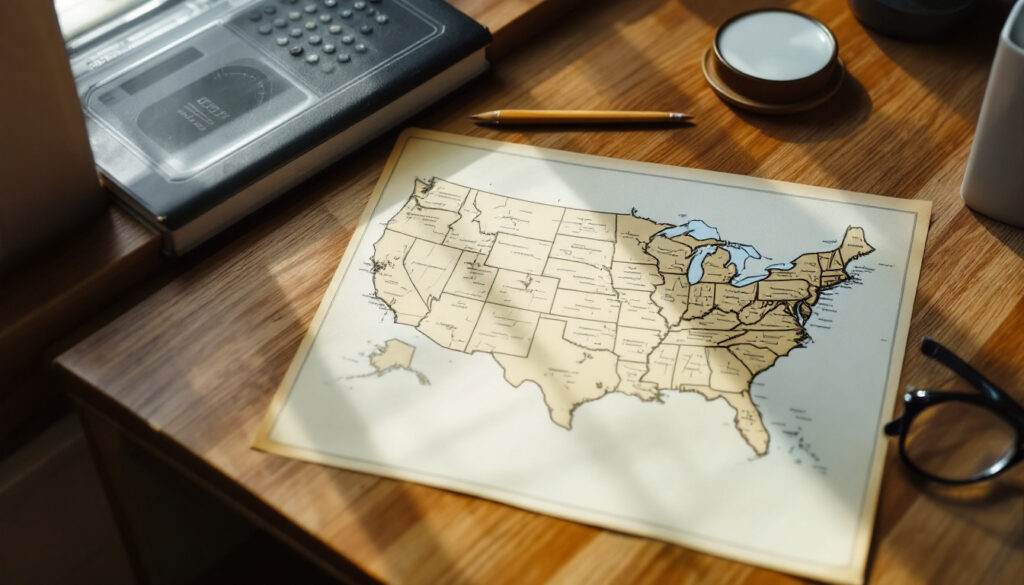
States regulate what can be sold inside their borders, and many of them stopped waiting for Congress years ago. Some restricted intoxicating hemp products long before this statute existed. Others built licensing regimes. Others did nothing at all.
The clearest current example is Illinois, where restrictions take effect on 12 November 2026 under state law. That date arrives whether or not Congress moves the federal one, because it is not the federal date. It is a separate state deadline that happens to land nearby.
North Carolina has been considering similar legislation. Others will follow. The pattern of the last few years is that state action keeps moving regardless of what happens federally.
Why the delay headlines mislead
On 2 August 2026 the Senate Appropriations Committee released continuing resolution text that would push most federal hemp restrictions from 12 November to 11 December 2026. As of 4 August 2026, that had not passed either chamber and had not been signed.
Even if it becomes law, it does two limited things. It buys roughly four weeks federally. And it reportedly does not cover cannabinoids that cannot be naturally produced by the plant, so the synthetic category loses hemp status on 12 November regardless.
What it does not do, and cannot do, is stop a state restriction from taking effect on its own schedule.
How to actually check where you live
Skip the listicles. State hemp lists on content sites go stale within weeks and there is a genuine cost to being wrong here.
Go to the primary source instead. Your state legislature’s site will have the bill text and its effective date. Your state department of agriculture usually administers hemp programs, and your department of health or your alcohol and cannabis regulator often handles consumable products. Those pages are less pleasant to read and considerably more reliable than anything summarising them.
Two questions get you most of the way. Does my state restrict intoxicating hemp products, and if so from what date? And does my state treat total THC and delta-9 THC differently from the federal test?
If you want the wider federal picture first, we have written up what the November deadline actually changes and, separately, what the April rescheduling order did and did not do. They are different laws and they are frequently mixed up.
The honest summary
Federal law decides what hemp is. Your state decides what you can buy. When those two disagree, the more restrictive one is the one you experience.
A note on what this is
This is a plain-English summary written on 4 August 2026 and checked against the primary documents rather than against other coverage. It is not legal advice, and it is not medical advice. Rules in this area move quickly, so check the date at the top before you rely on any of it.