
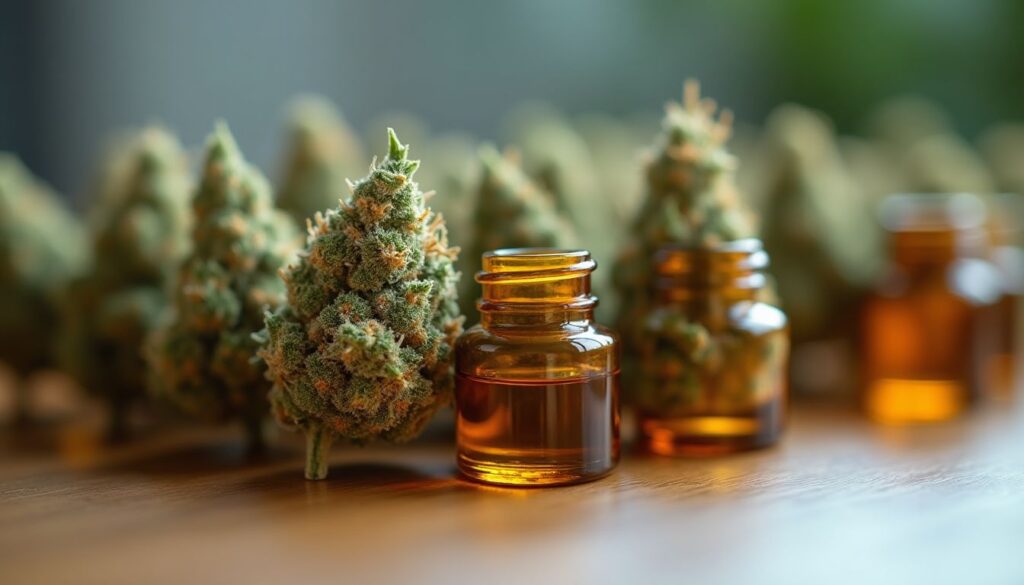

Close your eyes, crack open a jar of OG Kush, and you already know what it is before you read the label. That gassy, earthy, slightly citrus punch is a signature. A fingerprint. And that fingerprint is not made of cannabinoids. It is made of terpenes.
Strain-specific terpene profiles are how brands build instant flavor and effect recognition. When a customer smells your gummy, vape, or beverage and immediately thinks “that’s Sour Diesel,” you have done something powerful. You have turned an aroma into a memory, and a memory into loyalty. This post walks through several famous strains, their characteristic terpene makeups, the aromas and commonly-associated effects behind them, and how product creators actually recreate those profiles at scale.
One honest note before we start. Terpene percentages vary enormously between growers, phenotypes, harvest timing, and curing. The numbers here are approximate and illustrative, not lab-verified absolutes for any single batch. Think of them as a map of what a given strain typically smells and behaves like, not a guarantee.
Why strain-specific terpene profiles matter for brands
Cannabinoids do a lot of the heavy lifting, but they are largely odorless. Terpenes are what your nose actually reads. They are the aromatic compounds found across the plant world, in citrus peels, pine needles, hops, and lavender, and cannabis produces them in dizzying variety.
For a brand, a well-built terpene profile does three things at once. It creates a recognizable sensory identity, it can shape the commonly-associated experience of a product, and it lets you tell a story customers already know. “OG Kush” means something to people. Recreating that profile faithfully means you inherit decades of built-in brand equity.
The catch is consistency. Real flower changes batch to batch. A finished consumer product cannot. That gap between the romance of the strain and the reality of manufacturing is exactly what strain-specific terpene formulation exists to close.
OG Kush: earthy, gassy, and unmistakable
OG Kush is the strain that launched a thousand crosses. Its aroma is famously earthy and fuel-forward, with a sharp lemon-pine edge and a woody, almost skunky backbone. People often describe it as “gas with a citrus twist.”
The typical dominant terpenes are myrcene (earthy, musky, herbal), limonene (bright citrus), and beta-caryophyllene (peppery, spicy). That trio is what gives OG Kush its heavy-yet-lively character. The commonly-associated effect tends toward relaxed, mellow, and heavy-bodied, which is why so many people reach for it in the evening.
Because this profile is so terpene-driven rather than dominated by any single loud note, recreating it convincingly takes a balanced hand. Push the myrcene too far and it turns flat and muddy. Miss the caryophyllene and it loses its spicy grounding.
Sour Diesel: pungent fuel meets sharp citrus
If OG Kush is gas with citrus, Sour Diesel is diesel first and everything else second. This is the pungent, in-your-face strain that fills a room the moment the bag opens. There is a sour, almost acrid fuel note layered over bright lemon and a faint peppery kick.
Typical dominant terpenes here are limonene, myrcene, and pinene (fresh pine, sharp and clean). The pinene is a big part of why Sour Diesel reads as bright and alert rather than heavy. The commonly-associated effect leans uplifting, energetic, and social, which is a big reason it became a daytime favorite.
Recreating Sour Diesel is a balancing act between pungency and freshness. The “fuel” character is notoriously hard to capture with a single ingredient, so it usually comes from getting the ratio of citrus, herbal, and pine notes exactly right rather than from any one hero terpene.
Blue Dream: sweet berry with a soft herbal base
Blue Dream is the crowd-pleaser. Where Sour Diesel shouts, Blue Dream charms. The aroma is sweet and berry-forward, think blueberry candy, sitting on top of a soft, earthy, faintly floral base.
Its typical dominant terpenes are myrcene, pinene, and beta-caryophyllene. That combination gives you the mellow herbal foundation with just enough brightness and spice to keep it from feeling one-dimensional. The commonly-associated effect is gently uplifting and balanced, which explains its enormous popularity as an all-day option.
The tricky part with Blue Dream is that the sweet berry note people love is subtle. It sits inside the profile, not on top of it. Overdo the sweetness and it stops smelling like cannabis and starts smelling like a syrup. Faithful recreation is about restraint.
Gelato and Wedding Cake: the dessert strains
Dessert strains are their own category now, and Gelato and Wedding Cake lead it. These are sweet, creamy, and rich, with notes that lean toward vanilla, baked goods, and a gentle fruity finish. Wedding Cake in particular carries a tangy, almost cake-batter sweetness with a peppery undertone.
Typical dominant terpenes across this family often include beta-caryophyllene, limonene, and myrcene, with caryophyllene playing a bigger role than it does in fruitier strains. That peppery spice is what keeps the sweetness grounded and stops it from reading as flat sugar. The commonly-associated effect is usually relaxing and comforting, with a euphoric lift.
Dessert profiles are where brand differentiation gets interesting, because “sweet and creamy” can go a hundred different directions. Nailing the specific dessert character, cake versus ice cream versus fruit, is what separates a generic sweet blend from a true Wedding Cake match.
A classic landrace: Durban Poison
Landrace strains are the originals, the pure regional varieties that modern hybrids were bred from. Durban Poison, a sativa landrace from South Africa, is a great reference point because its profile is clean and distinctive.
It is known for a sweet, spicy, anise-like aroma with piney and slightly citrus notes. The standout terpene here is terpinolene (fresh, floral, herbal, a little piney), often alongside myrcene and ocimene. Terpinolene-dominant strains are relatively uncommon, which makes Durban Poison instantly recognizable to people who know it. The commonly-associated effect is energetic, clear, and uplifting, a true daytime sativa feel.
Landraces matter to brands because they carry authenticity. Recreating a genuine landrace profile signals that you care about the roots of the plant, not just the trendiest dessert cross of the month.
Quick-reference strain and terpene table
| Strain | Aroma character | Dominant terpenes (approximate) | Commonly-associated effect |
|---|---|---|---|
| OG Kush | Earthy, gassy, lemon-pine | Myrcene, limonene, caryophyllene | Relaxed, mellow, heavy-bodied |
| Sour Diesel | Pungent fuel, sharp citrus | Limonene, myrcene, pinene | Uplifting, energetic, social |
| Blue Dream | Sweet berry, soft herbal | Myrcene, pinene, caryophyllene | Gently uplifting, balanced |
| Gelato / Wedding Cake | Sweet, creamy, dessert-like | Caryophyllene, limonene, myrcene | Relaxing, comforting, euphoric |
| Durban Poison | Sweet, spicy, anise, piney | Terpinolene, myrcene, ocimene | Energetic, clear, uplifting |
Treat every number and note in that table as typical rather than fixed. A Sour Diesel grown indoors in one facility will not read identically to one grown outdoors somewhere else. The profile is a shape, and different phenotypes fill that shape differently.
How brands actually recreate these profiles
There are three main routes to putting a strain-specific profile into a product, and they are not equal.
- Botanical terpene blends. These are terpenes sourced from non-cannabis plants, then blended to approximate a strain’s aroma. They are widely available, cost-effective, and cannabis-free, which suits certain product categories and jurisdictions. The tradeoff is that a from-scratch botanical blend is an interpretation of a strain, not a copy of it.
- Cannabis-derived terpenes (CDT). These are terpenes extracted directly from cannabis. They can carry more of the true character of the plant because they include the minor and trace compounds that botanicals often miss. Availability and cost vary, and quality depends heavily on the source material and extraction.
- Cultivar-authentic reconstruction from real plant data. This is the most rigorous route. Instead of guessing at a profile, you build it from analytical data taken from the actual cultivar, matching the full ratio of terpenes measured by lab testing. This is the approach behind True To Plant profiling, where a strain’s real chemical fingerprint drives the formulation.
The difference in outcome is real. A rough botanical “OG Kush” blend might get you in the neighborhood. A profile reconstructed from genuine cultivar data, mapping the actual proportions of myrcene, limonene, caryophyllene and the trace terpenes underneath, gets you the fingerprint. For a brand staking its identity on recognition, that gap matters.
How to source strain-specific terpene profiles
Once you know which route you want, sourcing comes down to who you trust to get the profile right and prove it. A few things worth checking before you commit.
- Analytical backing. Ask whether profiles are built from real cultivar data and verified by GC-MS testing, rather than assembled by aroma alone.
- Manufacturing standards. Look for cGMP production if you are putting these into consumer products. Consistency batch to batch is the whole point.
- Breadth of library. A supplier with a large validated cultivar library gives you room to build a line, not just one product.
- Sampling before scale. Never commit to a full production run off a spec sheet. Smell it, taste it in your format, and test it with real people first.
This is where a specialist formulation partner earns its keep. Entour, founded by terpene scientist Dr. Jeffrey Raber, runs a hybrid model that spans ready-to-buy ecommerce and full B2B custom formulation, backed by 150+ cultivar profiles, GC-MS analysis, and cGMP manufacturing. If you want profiles reconstructed from genuine plant chemistry rather than approximated by nose, their cultivar-authentic Native Blends built on True To Plant data are a good place to see what that rigor looks like in practice.
If you are still narrowing down which strains fit your brand, the smart first move is to smell several side by side. Ordering a sample pack of strain profiles lets your team compare OG Kush against Sour Diesel against a dessert strain in your own space, in your own format, before a single production dollar is spent. Small step, big protection against an expensive mismatch.
Turning a famous strain into your signature product
The strains in this post became legends because their aromas are unforgettable. OG Kush’s gas, Sour Diesel’s fuel-citrus punch, Blue Dream’s sweet berry, the creamy pull of a dessert cross, the clean spice of a landrace. Each one is a ready-made sensory story your customers already recognize.
The job of a product creator is to carry that story faithfully into a consistent, testable, repeatable product. Whether you go botanical, cannabis-derived, or full cultivar-authentic reconstruction, the winning move is the same. Start from the real profile, verify it with data, sample it before you scale, and never present approximate numbers as absolute truth. Get that right and your product does not just smell like a famous strain. It becomes one people remember by name. When you are ready to match a profile to real plant chemistry, that is the moment to bring in a formulation partner who can prove the fingerprint.